
The estimated delivery time is 5–7 business days.Payment on Delivery – now available!
Sign up for the Family Points program ! Earn points on every purchase and get a 65 lei discount for every 200 points
Free shipping on purchases over 289 lei.




car seats - safe usage guide
Car Seats for Infants and Children: A Guide
A car seat for infants or children is specifically designed to protect a child from injuries in the event of a vehicle collision. It is secured in the car either by the vehicle's seatbelt or through special connectors that attach the car seat to the car's chassis.
The use of car seats is essential and legally mandatory until a child reaches a height of 150 cm (4'11''). When properly installed, car seats can significantly reduce the risk of serious injury to a child during a crash.
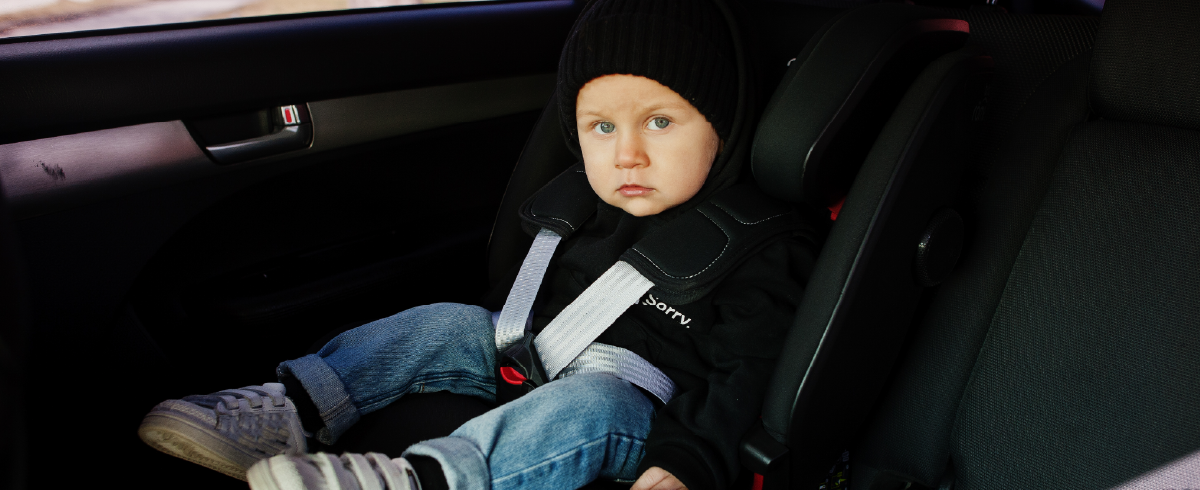
Ideal Placement of a Car Seat in the Vehicle
While all seating positions in a car can accommodate a car seat, the rear seats are the safest in case of a collision. The majority of severe accidents involve frontal or side-front collisions, making the driver’s and front passenger’s seats the most dangerous. The driver’s seat is particularly vulnerable due to its exposure to oncoming traffic.
Among the rear seats, the middle position is the safest, provided it meets certain conditions. It is the farthest from the car's sides and thus reduces the likelihood of injury during a crash. However, the middle seat must:
- Be as wide as the side seats.
- Have a seatbelt or Isofix connectors for proper installation.
If these criteria are not met, the middle seat is not suitable for a car seat. In such cases, it is recommended to place the car seat behind the front passenger seat. Studies indicate that right-side impacts (passenger side) are less frequent than left-side impacts (driver side), which are more exposed to oncoming traffic.
For families with more than one child, multiple car seats will need to be installed. It's important to leave some space between car seats to minimize the effects of seat movement during a crash. While spacing is manageable with two car seats, three seats may touch. In such cases, position the narrowest car seat, such as a booster seat for an older child, in the middle.
Important: If you need to install a car seat in the front passenger seat, the airbag must be deactivated. Only rear-facing car seats (often referred to as "egg seats") can be used in this position. However, it is generally advisable to avoid the front passenger seat for two key reasons:
- Frontal collisions are more common than rear or side collisions.
- Parents may forget to deactivate the airbag, putting the child at significant risk.
Seatbelt Rules
Standard seatbelts are designed for individuals 150 cm (4'11'') or taller. Car seats fill the gap for smaller children. Until a child reaches this height, they must always use an appropriate car seat.
When fastening a seatbelt on a child (whether the car's seatbelt or the one on the car seat), ensure:
- The belt rests snugly on the child’s shoulder.
- It starts at shoulder height, not above or below.
- The belt crosses the collarbone and does not touch the neck.
- The belt is tight enough that only 1-2 fingers can fit between the child and the belt.
Car Seat Installation Methods
There are two primary methods for securing a car seat in a vehicle:
A) Using the Vehicle’s Seatbelt
The car’s seatbelt is threaded through designated slots or guides on the car seat, as described in the seat’s user manual. These points are typically marked in blue or green.
Important: Parents should practice installing their specific car seat to ensure it is secured correctly every time. Proper installation is critical to protecting a child from severe injury during a crash.
B) Using the Isofix System
Isofix is a secure system that connects the car seat directly to the car’s chassis. It includes indicators (usually green) that confirm correct installation.
To use Isofix, the car must have compatible Isofix connectors located in the rear seats. These connectors are generally found at the base of the seat, where the seatback meets the cushion.
The Isofix system requires three points of contact between the car seat and the car:
- Two Isofix connectors at the base of the car seat, which attach to the vehicle’s Isofix anchors.
- A third point, either:
- Top Tether: A strap that secures the car seat to an anchor point in the car’s trunk, located behind the rear seats. Tighten the strap until the green indicator confirms it is secure.
- Support Leg: A built-in arm on the car seat or Isofix base that rests on the car floor to provide additional stability.